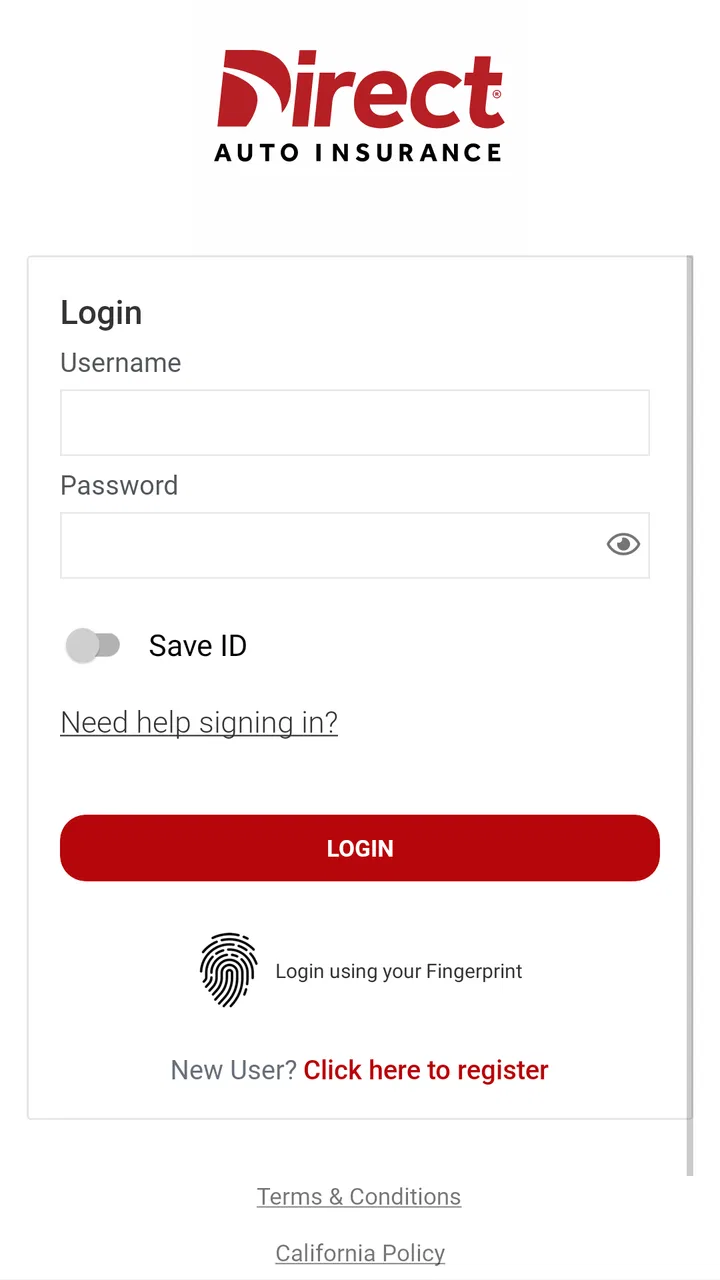
Direct Auto Insurance
- 4.6
- Rating
- 1.00M
- Installs
- Free
- Price

 Analysis by App-foxy
When I look at an insurance app, I am not mainly asking whether it looks modern. I want to know whether it makes ordinary car-insurance tasks less annoying, whether I can understand what I am doing before I submit anything, and whether I still feel in control when the app handles personal and vehicle information. Direct Auto Insurance, developed by National General Insurance, is built around that practical idea: keeping policy-related work close at hand so I can get back to driving.
It is a free finance app for everyone, with a 4.6 average from around 5,700 ratings and more than 500,000 installs. Those figures suggest that it has found a useful place for many drivers, although popularity alone does not tell me whether it fits every policyholder. My experience with this kind of app is that convenience depends less on flashy extras and more on whether the important screens are clear when I need them.
The real question is not whether an insurance app can replace every conversation with an agent; it is whether it gives me a dependable first stop for routine decisions. That is the standard I used here. Direct Auto Insurance is most appealing to someone who wants a mobile route into their insurance account and prefers handling simple matters independently. It is less convincing for a driver who wants detailed advice, complex policy interpretation, or a fully personal explanation before taking action.
You May Also Like

 Blood Strike: 2.5 Anniversary
Blood Strike’s Loadouts Turn Every Drop Into a Tactical Gamble
A close look at Blood Strike’s custom loadouts: how fast access to signature weapons reshapes its battle royale rhythm, rewards preparation, and narrows the gap between fights.

 Pandora - Music & Podcasts
Pandora’s Music Is Easy to Start, but Harder to Recover
Pandora’s strength is its low-effort path from a seed to a station. Its weak spot is how much confidence it asks you to place in connection, setup, and quiet recovery.

 8 Ball Pool
 Is Built on Rivalries, Rematches, and Routine
A close look at the rivalries, rematches, shared routines, and unanswered safety questions that turn a quick pool match into a persistent mobile community.

 Samsung Music
’s Quiet Strength Is Playing What You Already Own
Its reach comes less from spectacle than from dependable access to a personal library. That simplicity is both the app’s strongest retention engine and its ceiling.

 AccuWeather: Weather Radar
AccuWeather Review: A Quick, Clear Forecast for Everyday Decisions
For everyday plans, the best forecast is the one you can understand quickly. AccuWeather makes rain timing, radar, and local conditions easy to act on, with a few trade-offs.

 Hill Climb Racing
Why Hill Climb Racing Still Turns Crashes Into One More Run
A tiny car, a bumpy hill and one more upgrade: Hill Climb Racing keeps resurfacing because its simple chaos makes every near-miss feel personal.
More From Our News Desk



Where Direct Auto Insurance earns trust—and where I stay careful
I find the most useful way to judge an insurance app is to separate access from assurance: a quick account screen can save time, but it should not replace checking what a consequential action means. Here I focus on the habits that make routine use more reliable, from preparing before a busy day to pausing at sensitive steps. That balance matters especially when convenience and careful control need to work together.
A practical tool from a recognizable insurance developer
The developer is National General Insurance, while the app is presented under the Direct Auto name. That distinction matters because an insurance app is not an anonymous budgeting tool: it connects to a real financial and legal relationship involving a vehicle, a policy, and potentially sensitive personal details. I would therefore approach it as an account-management companion rather than as an independent insurance marketplace.
The app was released on August 17, 2021, and its current version is 1.90.738. It supports Android 9 and later. I would check that operating-system requirement before installing, especially on an older phone that still works well for calls and navigation but may no longer receive current app support. The app is free to download, though that should not be confused with free insurance. The charge for coverage belongs to the policy itself, not to the download.
That is an important expectation to set. Direct Auto Insurance can make access more convenient, but it does not turn insurance into a simple subscription with no decisions attached. The value is in reducing friction around the relationship I already have with the insurer. If I am comparing several companies, looking for the cheapest available quote, or trying to understand which coverage is suitable for a complicated situation, I would still treat this app as only one part of the process.
What I would want to verify before handing over information
Insurance apps naturally sit close to information that deserves careful handling. A user may be dealing with contact details, vehicle information, policy documents, payment-related tasks, or an incident that requires a claim. That does not automatically make the app unsafe, but it does mean I would slow down at sign-in and submission screens instead of tapping through them casually.
My first trust check would be simple: install the app from the official store, confirm that National General Insurance is shown as the developer, and avoid unofficial copies or links sent through unexpected messages. I would also read the permission prompts as they appear. A permission should make sense for the action I am trying to perform; if a request feels unrelated, I would pause rather than grant access automatically.
I would apply the same caution to notifications. Alerts can be useful for reminders and account activity, but I prefer to decide whether sensitive information should appear in lock-screen previews. On a shared vehicle or family phone, that small setting can matter. The best habit is to review notification visibility in the phone’s settings after setup, rather than assuming every message will be private simply because the app itself requires a login.
Another sensible step is to use a unique password for the insurance account and keep the phone protected with its normal screen lock. I would not save credentials on a device that other people regularly use. These are not special tricks for Direct Auto Insurance; they are particularly relevant here because an unlocked insurance account can reveal more about a driver than a typical entertainment app.
Control matters most at the moment of action
The most useful way to judge the app is to follow a realistic task from beginning to end. Imagine I am leaving for work and realize I need to confirm my insurance information before a vehicle-related appointment. I do not want to search through old emails, remember which document is current, or wait on hold for a basic question. I open the app, sign in, review the account area, and look for the relevant policy information before deciding whether I need further help.
That workflow sounds ordinary, but the important detail is the pause before submission. I would check the vehicle, policy, and contact information shown on screen rather than assuming the app has selected the right item. If the app presents a form or request, I would read the final confirmation carefully and take a screenshot or note of the confirmation details when appropriate. This creates a personal record without relying on memory.
For a payment-related action, I would be even more deliberate. I would verify the amount, account, and timing before confirming, then look for an in-app confirmation or other record. If the result is unclear, I would not repeat the action immediately; duplicate attempts are exactly the kind of avoidable mistake that can happen when a mobile connection is slow. In that situation, contacting the insurer through an official channel is safer than guessing.
This is one of the app’s practical strengths: it encourages a self-service mindset. I can begin with the information already connected to my insurance relationship instead of explaining the entire situation from scratch. The trade-off is that self-service puts more responsibility on me. A convenient screen does not remove the need to check details, understand what I am authorizing, or ask a person when the situation is unclear.
Data-sensitive moments deserve a slower workflow
Not every use of the app carries the same level of sensitivity. Browsing general account information is different from entering payment details, changing contact information, or reporting a vehicle incident. I would treat the latter tasks as decision points, not quick taps. Before sending anything, I would confirm that the phone is on a trusted connection and that no one nearby can read the screen.
A claim-related situation is a good example. After a minor collision, I may be stressed, distracted, and tempted to enter the first description that comes to mind. I would first make sure everyone is safe and follow any required emergency steps. Only then would I use the app to organize insurance-related information. I would write a factual description, review dates and vehicle details, and avoid guessing about fault. If the app offers a path for starting a claim, I would still expect that a complicated incident may need direct discussion with an insurance representative.
That distinction is important because mobile convenience can create false confidence. A form can collect information efficiently, but it cannot necessarily explain every coverage question or resolve a disagreement about what happened. I see Direct Auto Insurance as useful for initiating or organizing routine work, not as a substitute for professional judgment in a serious accident or disputed claim.
I would also be careful with uploaded images or documents. Before selecting a file, I would check that it is the intended document and that it does not include unrelated personal information. After sending it, I would keep the confirmation and avoid repeatedly uploading the same material unless the app clearly indicates that the first attempt failed. This small workflow reduces both privacy exposure and administrative confusion.
How it compares with calling, browsing, and doing nothing
The traditional alternative is a phone call. Calling an agent or support line is usually better when I need an explanation tailored to my circumstances, when a policy change has several consequences, or when a claim is emotionally and financially significant. The disadvantage is the waiting and the need to repeat information. Direct Auto Insurance is more attractive for the smaller tasks that do not justify a conversation.
A web browser offers another comparison. A website may be easier on a larger screen, particularly when I am reading long documents or checking several details at once. The app is more natural when I am already holding my phone, away from a computer, or dealing with a time-sensitive account task. I would choose the browser for careful document review and the app for quick access, provided the mobile screen gives me enough context to make a safe decision.
There is also the option of doing nothing until a problem becomes urgent. That is the weakest approach. An outdated phone number, an unclear policy document, or an untested login can become much more stressful when I am standing beside a damaged car. One useful habit is to open the app during a calm moment, confirm that I can access the account, and learn where the important information is before an emergency occurs.
Who will benefit most from the mobile approach
I think Direct Auto Insurance is a good fit for drivers who prefer handling routine insurance work on their own and who already have a relationship with Direct Auto. It is also useful for people who keep most of their daily life on a phone and do not want insurance to be the one exception that requires searching through paperwork.
It can be particularly helpful for a busy household with more than one vehicle or driver, because a central account view is easier to consult than scattered messages and documents. Even then, I would not assume that every family member should share the same login. Each person should understand whose account is being used and who is authorized to make a change.
I would skip relying on it as my main insurance tool if I rarely use smartphones, if I need large-format documents for careful reading, or if I want a human explanation before every decision. I would also avoid making the app my only plan during a major claim. Keeping the insurer’s official contact route available is sensible, particularly when the issue involves injuries, disagreement, legal concerns, or a question that the screen does not answer clearly.
Small habits that make the app more useful
My first tip is to set up access before I need it. A first login during a roadside problem is a poor time to discover that I do not remember the credentials or that my contact details need updating. A quiet setup session also gives me a chance to review what the app displays and decide which notifications are appropriate.
My second tip is to separate viewing from authorizing. I can open the account to check information without immediately changing anything. When I do need to submit a request, I would read the summary screen as if I were checking a paper form: name, vehicle, dates, amounts, and destination. This two-step habit is more reliable than treating every button as harmless navigation.
My third tip is to keep a simple personal record of important confirmations. I would note the date, the action taken, and any reference shown after completion. That is useful if the app closes, the phone loses signal, or I later need to explain what I did to support. It also makes the app part of an organized insurance routine rather than a place where information disappears after one tap.
My fourth tip is to review access after changing phones or sharing a device. Remove the old device from your personal routine, sign out where appropriate, and check whether notification previews are visible. These steps are easy to overlook because the insurance task itself may already be finished, but account control continues after the form is submitted.
A balanced view of convenience and responsibility
The app’s strongest quality is focus. It is not trying to be a general finance dashboard, a driving game, or a broad comparison service. Its purpose is tied to car insurance, and that narrow purpose can make it easier to reach the account information I actually need. The free download and Everyone content rating also make it approachable for a wide range of users.
Its limitation is the same focus. A mobile account interface cannot replace every insurance conversation, and a clean self-service path may not provide enough explanation for an unusual policy situation. The app also depends on my phone, login access, attention to detail, and willingness to protect the account. If any of those fail, convenience can quickly turn into frustration.
I would also resist judging it solely by the 4.6 average or by the roughly 2,200 written reviews. Those figures show that many people have taken the time to rate or discuss it, but my own experience would depend on the task I need to complete, the device I use, and the complexity of my policy. A driver who only wants quick account access may be delighted, while someone handling a difficult claim may reasonably expect more direct support.
My cautious verdict
Direct Auto Insurance is a sensible companion for managing ordinary car-insurance needs from a phone. I like the idea of having a direct route to policy-related information instead of treating every small question as a phone call. The app’s 1.90.738 release and Android 9 minimum make the compatibility check straightforward, and its established presence gives it more context than an unknown finance download.
Still, I would use it with deliberate habits. I would install it through the official app store, review permissions and notification visibility, protect the account with a secure login, and pause before submitting payment, contact, vehicle, or claim information. I would keep a human support option available for serious or confusing matters rather than assuming the app can settle everything.
My recommendation is therefore positive but specific: choose it if you are a Direct Auto customer who wants convenient self-service and is comfortable checking details independently. Look elsewhere—or rely more heavily on an agent or full website—if your priority is extensive explanation, complex policy advice, or large-screen document work. Used within those boundaries, Direct Auto Insurance can make the routine side of car insurance easier without asking me to surrender control over important decisions.
FAQs for Direct Auto Insurance
01What is the Direct Auto Insurance app used for?
The Direct Auto Insurance app is designed to provide users with convenient access to their insurance policies, enabling them to manage policy details, make payments, and file claims directly from their mobile device. It also offers tools for finding local agents and accessing roadside assistance, all in one comprehensive platform.
02Can I file a claim through the Direct Auto Insurance app?
Yes, the Direct Auto Insurance app allows users to file claims quickly and efficiently. The app guides you step-by-step through the claims process, including capturing photos of the accident scene, entering necessary details, and submitting your claim. This can streamline the process and reduce wait times associated with traditional methods.
03Is the Direct Auto Insurance app available for both Android and iOS devices?
Absolutely, the Direct Auto Insurance app is available for download on both Android and iOS platforms. Users can easily find the app on the Google Play Store for Android devices and the Apple App Store for iOS devices, ensuring widespread accessibility for all smartphone users.
04Does the Direct Auto Insurance app offer payment management features?
Yes, the app provides comprehensive payment management features. Users can view upcoming payment schedules, make one-time payments, set up automatic payments, and even receive notifications about due dates. This functionality helps users stay on top of their insurance payments with ease and convenience.
05How secure is my personal information on the Direct Auto Insurance app?
The Direct Auto Insurance app employs advanced security measures to protect users' personal information. These include encryption protocols and secure login processes to ensure that your data remains confidential and protected against unauthorized access. Regular updates also help maintain the app’s security integrity.
Pros
- User-friendly interface for quick navigation.
- Comprehensive coverage options available.
- Easy claims submission through the app.
- Real-time policy updates and notifications.
- 24/7 customer support via chat.
Cons
- Limited payment method options.
- Occasional app crashes reported.
- Some features require stable internet.
- No international coverage options.
- Location tracking required for some services.

Direct Auto Insurance
Gallery